Enhavim × George Pólya
How to Solve It Is an Answer but Misses the Right First Question
George Pólya gave the world a masterpiece on How.
Enhavim begins three questions earlier.
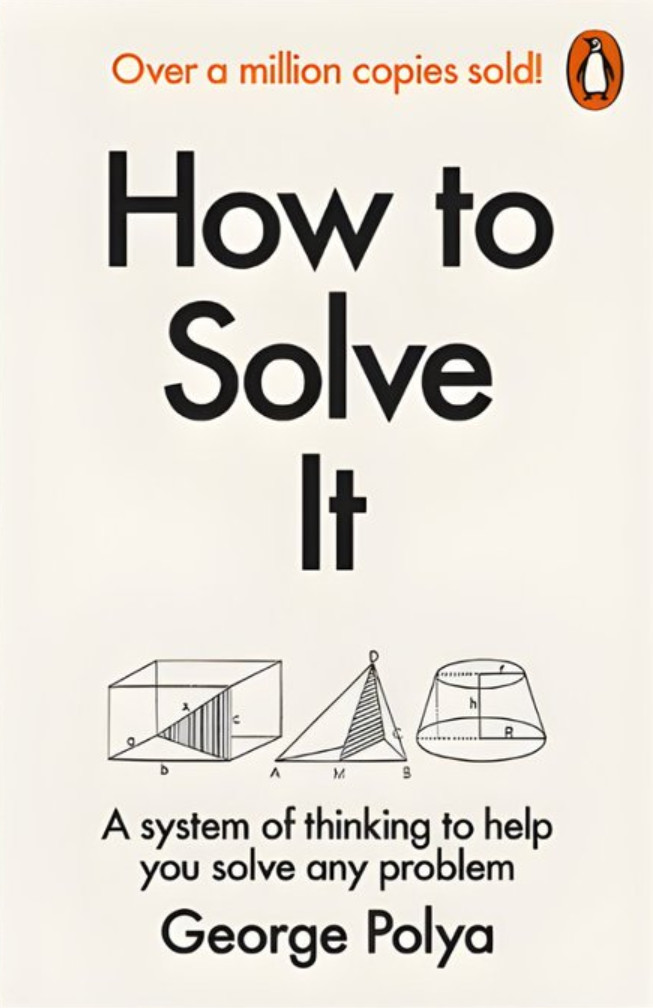
How to Solve It — Pólya, 1945
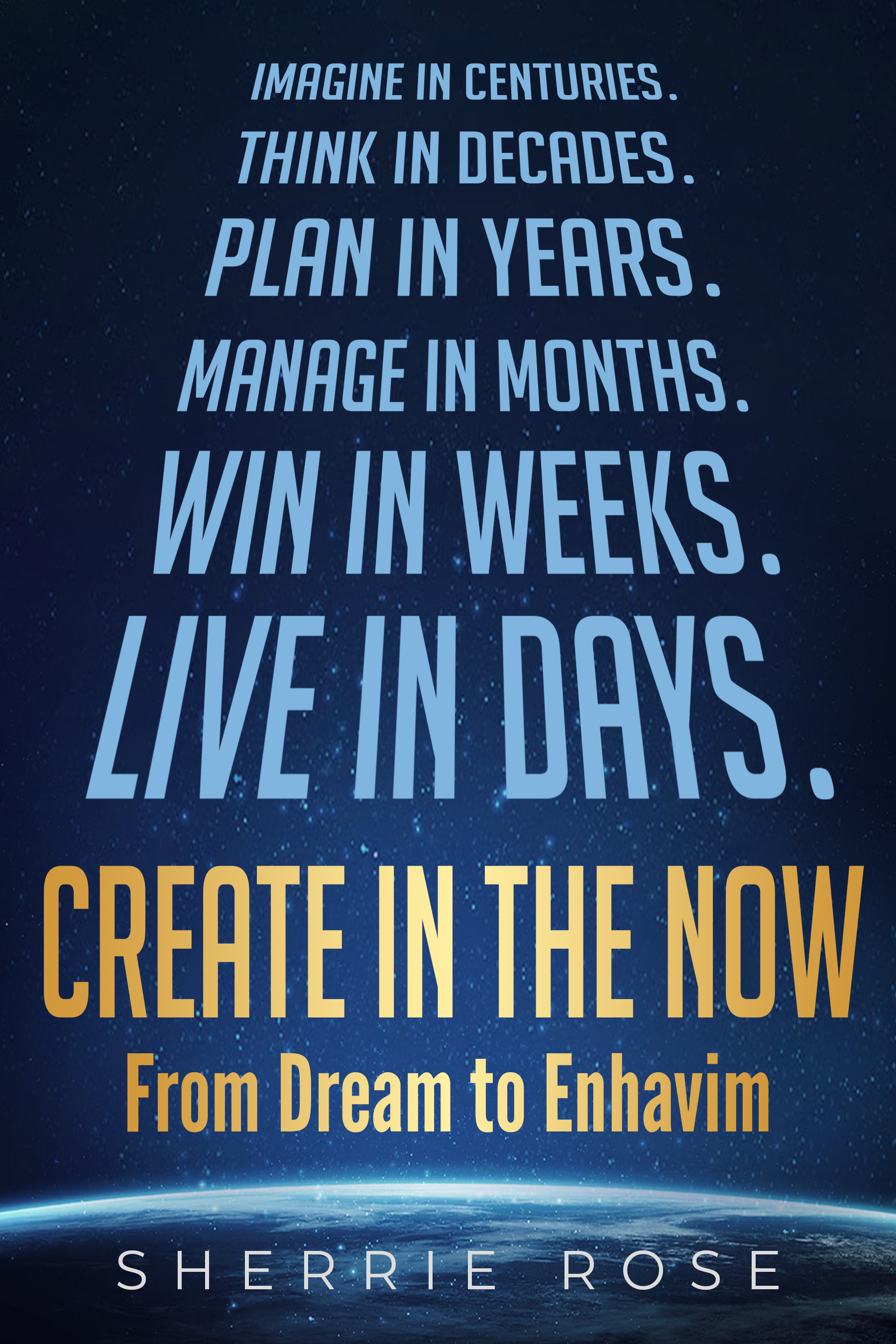
Create in the NOW — Sherrie Rose
George Pólya published How to Solve It in 1945. The same year the world was rebuilding from ruins and asking, collectively, what do we do now? Princeton University Press almost didn’t publish it. It sold over a million copies and was translated into more than seventeen languages.
Mathematicians loved it. So did engineers, scientists, and teachers who recognized that Pólya wasn’t really writing about math. He was writing about how minds move from confusion to clarity. His four-step framework (Understand, Plan, Execute, Reflect) described something universal: the shape of every meaningful act of solving.
It also began with How.
The Reframe
Humans want the How. They reach for it first, organize around it, build careers on it. How do I grow this? How do I solve this? How do I get from here to there?
This instinct isn’t wrong. It’s premature.
In Enhavim, How lives inside Mission: essential, powerful, but not the starting point. The questions that come first are the ones most people skip:
What does this look like when it’s real? Not a goal statement. Not a mission slide. A living image of the destination: a deep desire, a compelling force that illuminates the path ahead.
Why does this matter deeply enough to pursue? Purpose is what you return to when execution gets difficult, when the plan needs revision, when the result disappoints. Without it, How becomes hollow motion.
Who has the character, the capacity, the standing to carry this forward? Who Before How is not a tagline. It is a filter. The wrong Who executing the right How produces the wrong result. Always.
Now the method has something to serve. When you arrive at How through Vision, Purpose, and Who, the question transforms. It is no longer a search for any available path. It is a precise inquiry into the best path for this vision, this purpose, this person.
Pólya teaches you How to move. Enhavim establishes the Vision, the Purpose, and the Who that determine whether the movement is worth anything at all.
How to Solve It doesn’t lose value in this sequence. It gains it. A problem-solving framework without Vision is technique in search of a reason. With Enhavim upstream, Pólya’s four steps become the engine of something that was already worth building.
The Mapping
Pólya’s four steps and Enhavim’s framework are not competing systems. They are adjacent layers, one operating inside the other.
See the Gap Clearly
Pólya’s first move is honest perception: What is being asked? What is known? What is unknown? In Enhavim, this is Vision: a sharp, specific image of a desired future. Both frameworks refuse to let you begin with fog. You cannot solve a problem you haven’t truly seen, and you cannot pursue a vision built on a vague feeling.
Position Before You Move
Pólya’s second step is positional: choose a strategy, look for patterns, connect to what you already know, break the large problem into smaller parts. Enhavim calls this Strategy (deliberate assessment of the landscape) and Mission (the roadmap that breaks the grand vision into achievable milestones). Neither framework rewards charging into execution.
The Architecture of Execution
Pólya’s execution step is disciplined and sequential: move step by step, stay consistent, adjust only when the evidence demands it. Enhavim layers this into Goals (operational), Projects (executional), Tactics (procedural), and Tasks (transactional). These are not bureaucratic categories. They are the actual architecture of How.
Reflection That Means Something
Pólya’s final step is often misread as error-checking. It is not. It is meaning-making. In Enhavim, this is where Purpose lives. Reflection without Purpose is audit. With Purpose, it becomes growth. That is the moment where doing something becomes understanding something, and understanding becomes the foundation for what comes next.
The Deeper Alignment
Pólya distinguished between heuristic thinking (explore, generate, hypothesize) and rigorous thinking (verify, confirm, prove). Enhavim maps onto this distinction with precision.
Pólya
- Heuristic: explore, generate, guess
- Rigorous: prove, verify, confirm
- Against pedantry: never follow steps mechanically without understanding why they exist
- Mastery over method-obsession
Enhavim
- Vision and Purpose: expansive, generative, directional space
- Strategy through Tasks: concrete, measurable, executable space
- Against task-obsession: never let the bottom of the pyramid blind you to the top
- Enhavim over task-obsession
Both frameworks carry the same warning at different altitudes. Pólya calls it pedantry: following the rules mechanically without understanding why they exist. Enhavim names the same danger from the other direction, becoming so absorbed in the details of Tasks that the singular Enhavim disappears from view.
There is a useful photograph for this. In December 1968, Apollo 8 astronaut William Anders looked out the window and saw the Earth rising over the lunar horizon. He took the photo known as Earthrise. In 1972, the “Blue Marble” photo taken by Apollo 17, and for the first time, humanity saw itself whole: one small sphere, vivid and fragile, against the absolute black of space. The people on that planet were busy with tasks. Wars, deadlines, negotiations, grocery lists. All pressing issues. But the Earth photograph asked the question none of the tasks could answer: what is all of this for?
Artemis II carried that tradition forward, returning new images of Earth from cislunar space. Same planet. Same perspective shift. The big view does not cancel the close work. It restores the reason for it.
That is what Vision does inside Enhavim. It is the Earthrise photo you keep on the wall while you work.
Neither framework lets you hide inside the work.
Synthesis
Not a competition. A continuum. Pólya’s framework lives inside Enhavim’s Mission layer, exactly where it belongs.
| Pólya | Enhavim |
|---|---|
| Understand the Problem | Vision |
| Devise a Plan | Strategy + Mission |
| Carry Out the Plan | Goals → Projects → Tactics → Tasks |
| Look Back | Purpose + Transformational Reflection |
| Heuristic thinking | Vision, Purpose: expansive space |
| Rigorous thinking | Strategy through Tasks: executable space |
| Against pedantry | Enhavim over task-obsession |
But it is better after What, Why, and Who are answered.
Meet Sherrie Rose
Sherrie Rose is a multi-book author who helps high-achievers and legacy-focused leaders clarify their purpose and mission led by vision, and turn decades of experience into what she defines as Masterwork: “Between livelihood and legacy, that’s Masterwork, where your wisdom leaves its mark.™”
She helps clients become legacy worthy, focusing on contribution at their fullest potential. Sherrie is Chief Legacy Officer, Masterwork Advisor, and multi-book author, and her personal motto is: “The Real Currency is Relationship Riches.”
Through her work, Sherrie Rose helps individuals create legacy worthy lives marked by clarity and generosity, where you share what counts, guided by care for others’ growth and improvement.