Why Most People Misunderstand "TIME"
One word, dozens of meanings - from historical eras to musical rhythm
The word "time" stands as one of the most versatile terms in the English language, functioning across dozens of distinct contexts with radically different meanings.
From clock hours to historical eras, from musical rhythm to mathematical operations, this single word adapts to express concepts that seem entirely unrelated to one another.
What links "keeping time" in music to "making time" for an appointment, or "running out of time" to "having a great time"?
The Leader's Greatest Asset: Timing
One of the most crucial yet underrated traits of a great leader is a refined sense of timing. Courage and vision alone are not enough. Change must be introduced at the pace people can absorb, and moments of hesitation or acceleration must be chosen with wisdom.
Leadership is not only about what is done, but when it is done and when it is not. A leader must know when to speak and when to be silent, when to act and when to wait.
A leader's role may be to lay the foundation rather than see the results.
"There is a time for everything, and a season for every activity under the heavens."

The Many Faces of Time
Here are some different uses of "TIME" which sheds some light on why time is so misunderstood.
Time: Historical Periods & Eras
Context: Historical Era/Period - A particular period in history or someone's life
Context: Personal Era/Generation - The period during which someone lived or was active
Context: Contemporary Period/Lifetime - The period during which someone was active or alive
Context: Cultural Indicator - Reflecting current social or cultural conditions
Time: Availability & Leisure
Context: Available Leisure - Free or available; not occupied by obligations
Context: Unavailability - Too busy, a full calendar of activities
Context: Creating Availability - Deliberately arranging one's schedule to accommodate something
Context: Leave/Vacation - Break from work or regular duties
Time: Clock & Schedule
Context: Clock Time - Refers to a specific point on the clock; hours and minutes of the day
Context: Punctuality/Schedule - Adhering to a schedule; not early or late
Context: Measured Performance - Recorded duration of a performance or event
Time: Rhythm & Synchronization
Context: Rhythm/Tempo - Musical beat or rhythm; the pace of music
Context: Synchronization - Moving or acting in coordination with something else
Context: Accelerated Pace - Moving at twice the normal speed, especially military
Time: Appropriate Moment & Season
Context: Appropriate Moment - The right or appropriate moment for something to happen
Context: Childbirth/Death - The moment of birth or death approaching
Context: Season/Appropriate Period - The proper season or period for an activity
Time: Filling or Manipulating
Context: Idle Activity - Filling unproductive or waiting periods with activity
Context: Delaying Tactic - Creating delay to gain an advantage or prepare
Context: Extended Survival - Living beyond expected or probable duration
Time: Duration & Span
Context: Duration - A period or span; the amount something takes
Context: Abstract Duration - An abstract resource or requirement
Time: Deadlines & Expiration
Context: Deadline/Limit - A finite resource approaching depletion
Context: Expiration - The end of an allowed or allotted period
Time: Experience & Difficulty
Context: Experience/Enjoyment - The quality of an experience; how one enjoyed an event
Context: Difficulty/Struggle - Experiencing challenges or hardship
Time: Verbs (Action of Timing)
Context: Measurement - To measure the duration of something
Context: Scheduling - To schedule or plan when something happens
Time: As Agent or Force
Context: Agent of Change - Personified as an active force that brings about resolution or healing
Time: Turns & Opportunities
Context: Turn/Opportunity - One's designated turn or opportunity
Time: Occasions & Instances
Context: Occasion/Instance - A specific occurrence or instance of something happening
Time: Sequential Order
Context: Sequential Order - Doing things in sequence rather than simultaneously
Time: Pause & Break
Context: Pause/Break - Temporary stoppage in sports, games, or as discipline
Time: Prison Sentence
Context: Prison Sentence - Serving a jail or prison sentence
Time: Mathematical Operation
Context: Multiplication - Mathematical operation indicating repeated addition
Time: Pay Rate
Context: Pay Rate - Hourly wage rate, especially overtime compensation
Time: Temporal Reference
Context: Temporal Reference - Grammatical or philosophical reference to past, present, or future
The Linguistic Flexibility of Time
This linguistic flexibility of the word time reveals how deeply embedded the concept of time is in human experience.
As a noun, "time" can denote a specific hour, a historical era, or an abstract duration.
As a verb, it describes the act of measuring or scheduling.
As a multiplier in mathematics, it indicates repeated addition.
Each usage carries its own distinct meaning, yet speakers intuitively understand which interpretation applies based on context alone.
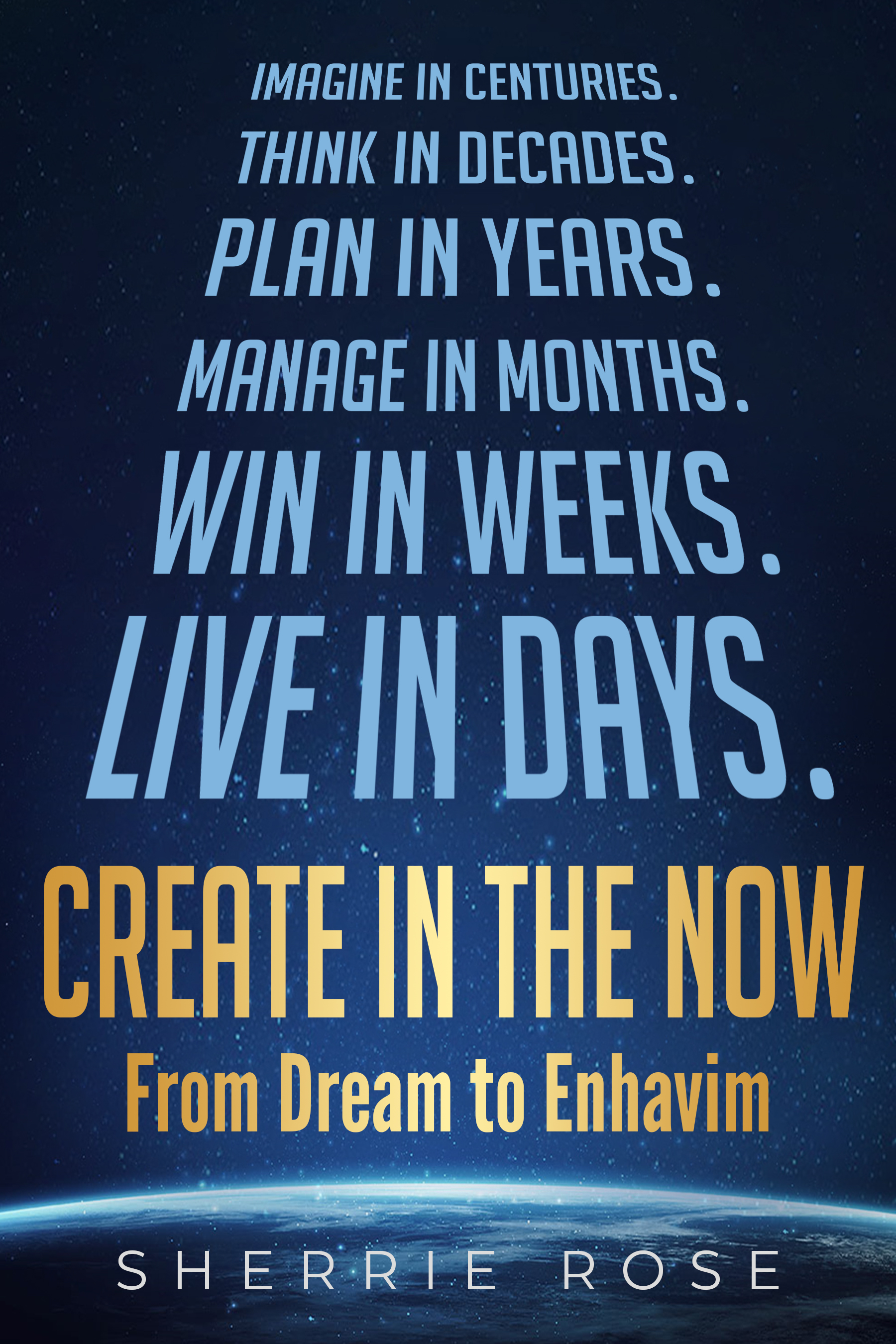
Create in the NOW
Discover more about how to Imagine in Centuries, Think in Decades, Plan in Years, Manage in Months, Win in Weeks, Live in Days, and Create in The NOW.
Create in the NOW: From Dream to Enhavim by Sherrie Rose reveals the hidden architecture of time and how to bridge century-spanning visions with daily decisions.