The Story of Time
A Millennium Exhibition & Book
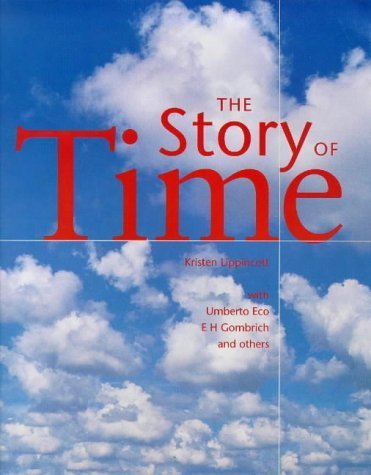
The Story of Time was the name of an exhibition and companion book created to mark the millennium for the year 2000, staged in Greenwich at the precise location where the new millennium would officially begin.
As home to the Prime Meridian and Greenwich Mean Time, Greenwich holds unparalleled symbolic significance for global timekeeping, making it the ideal setting for this ambitious exploration.
The Exhibition (December 1999 - September 2000)
Held at The Queen's House at the National Maritime Museum in Greenwich, England, this international exhibition examined creation myths, time measurement, ageing, art, and the end of time through diverse cultural artifacts spanning civilizations and eras.
The book and exhibition together offered a comprehensive multimedia examination of humanity's relationship with time, weaving together artifacts, scholarly essays, and visual documentation to illuminate how cultures across the world have understood, measured, and represented this most universal yet elusive dimension of existence.
The exhibition brought together objects from multiple continents and historical periods, allowing visitors to trace humanity's evolving relationship with temporal concepts from ancient astronomical observations to modern atomic clocks.
A Comprehensive Exploration
The Story of Time was an international exhibition presenting a history of time across the globe from the earliest civilizations onwards, examining how different cultures have:
- Understood the nature and passage of time
- Measured and tracked temporal cycles
- Represented time through art and artifacts
- Contemplated mortality and eternity
The book and exhibition together offered a comprehensive multimedia examination of humanity's relationship with time, weaving together artifacts, scholarly essays, and visual documentation to illuminate how cultures across the world have understood, measured, and represented this most universal yet elusive dimension of existence.
Story of Time: The Book
The 304-page companion volume, edited by Kristen Lippincott, was a monumental compilation of 23 essays from distinguished scholars. Umberto Eco contributed the foreword, while E.H. Gombrich wrote an essay on the history of anniversaries.
Multidisciplinary Perspectives
Essays were organized into categories that focus on the creation, measurement, depiction, experience, and end of time. The collection drew from multiple disciplines including:
- History and historiography
- Music
- Geology
- Literary criticism
- Anthropology
- Religion
- The history of engineering
The richly illustrated 1999 book published by Merrell Holberton has over 400 color photographs and illustrations, showcasing Renaissance sundials, water clocks, Hindu deities representing cosmic time cycles, French revolutionary decimal timepieces, and artworks exploring mortality and transience.
Critics praised its scholarly depth and visual richness, calling it a sophisticated counterpoint to millennium sensationalism.
Global Temporal Concepts
Contributors explored subjects like:
- Cyclical versus linear time concepts in China
- Inuit temporal understanding
- The evolution of mechanical timekeeping from pendulums to atomic clocks
- Time in portraiture
- Aboriginal Australian temporal frameworks
A Contemporary Perspective on Time
While The Story of Time examined humanity's historical relationship with temporal measurement and cultural understanding, more recent works have explored the practical application of different time scales in creative and purposeful living.
Time Has Levels
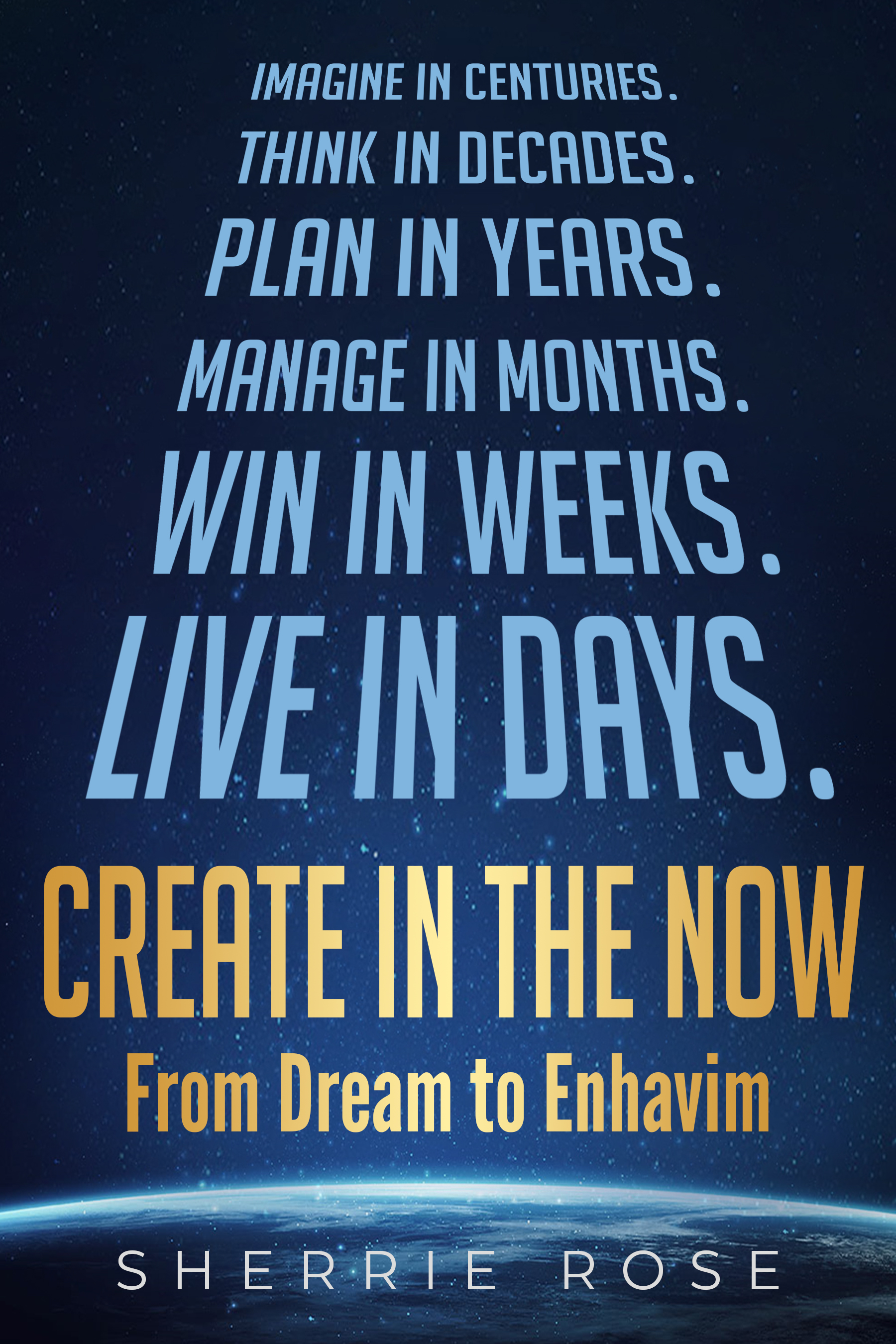
Sherrie Rose’s “Create in the NOW: From Dream to Enhavim” presents a framework where “Time has levels. Imagine in Centuries. Think in Decades. Plan in Years. Manage in Months. Win in Weeks. Live in Days. Create in The NOW.”
This hierarchical approach to temporal consciousness echoes the exhibition's exploration of how different cultures and eras have conceptualized time's layers, but applies these insights to contemporary creative practice and the pursuit of meaningful work.
The book bridges ancient wisdom about time with modern applications, showing how understanding time's architecture can transform how we approach our most meaningful endeavors.